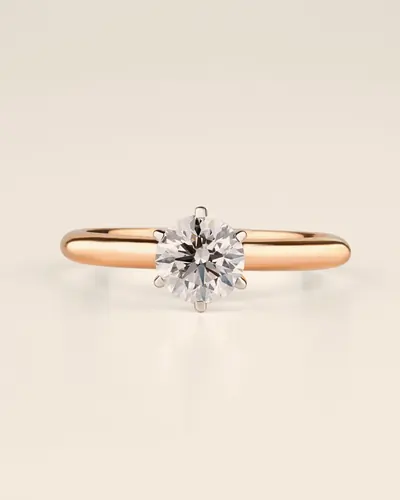
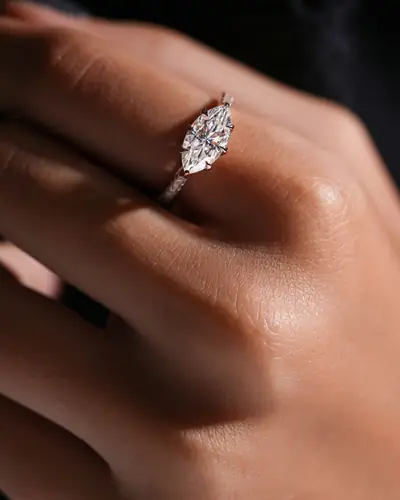
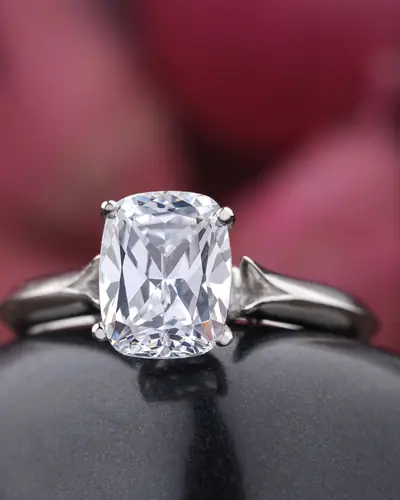
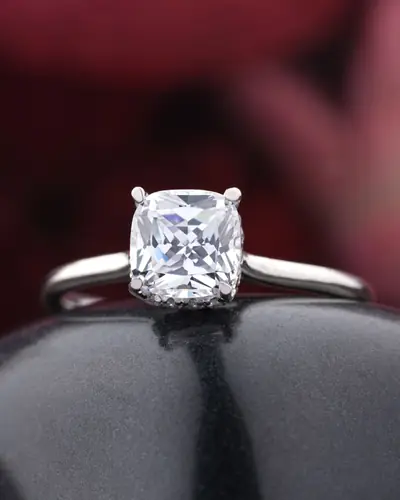
A solitaire is one lab grown diamond on a simple band, the most chosen engagement ring style and the one that never dates. Browse solitaire settings in every shape and metal, each with a starting price, and see your favorites with matching stones at our 47th Street showroom.
No pieces match those filters. Clear one, or call (212) 642-4345 and we will tell you what is in the showroom.
Starting prices. Your final price depends on the diamond you choose.
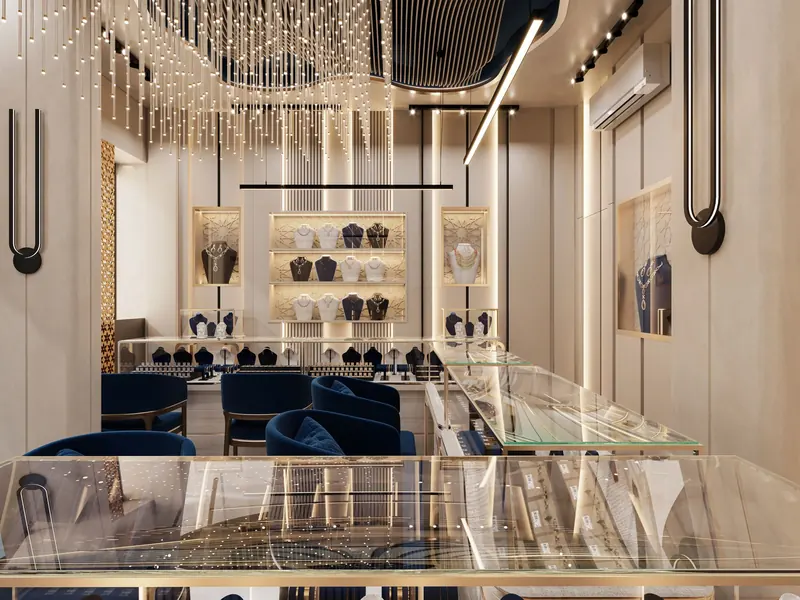
There is no cart here. Save what you like, book a time, and we lay it all out for you at 30 West 47th St, Suite 806, between 5th and 6th avenue.
Book a viewingA solitaire engagement ring is one lab grown diamond on a simple band, nothing to distract from the stone. It is the most chosen engagement ring style for good reason: it never dates and it works with any wedding band. Solitaire rings are priced from $1,290, each center stone with an IGI or GIA report.
With a solitaire, the diamond does all the talking. That makes the stone the place to put your budget. Because lab grown diamonds cost far less than mined stones of the same size and grade, many people choose a larger or whiter center than they first planned. A solitaire shows off that choice cleanly.
It is also the easiest style to live with. There are fewer small stones to check, it slips under gloves and sleeves more easily, and any band sits beside it.
The setting is where solitaires differ:
Band width matters too. A slim band makes the center look bigger. A wider band feels sturdy and suits larger hands. At the showroom we keep samples in each style so you can try them on in a few minutes.
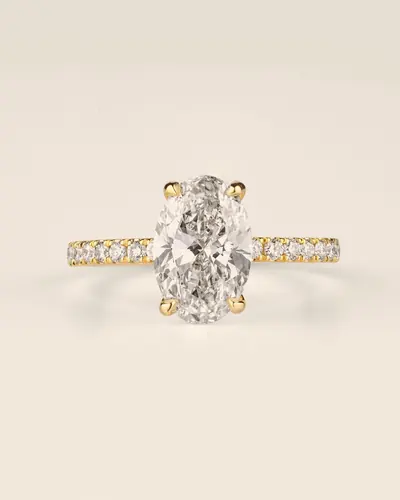
Every shape works. A round solitaire gives the most sparkle. An oval solitaire looks larger and lengthens the finger. An emerald cut solitaire looks calm and architectural. If you want a little extra sparkle without losing the clean look, a hidden halo is a solitaire from the top with diamonds tucked underneath.
Since the stone is the whole look, give it time. Cut comes first, then color and clarity. Our guide to the 4Cs walks through it, and every stone we show comes with its report number so you can check it yourself.
Tell us the shape, size and budget on the stone request page. We pull three to five matching lab diamonds and set them next to the solitaire settings you saved. Then book a viewing on 47th Street and see the finished look on your hand.
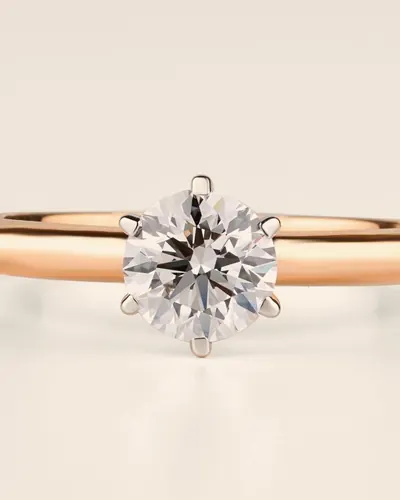
Four prongs show more of the diamond and look slightly square. Six prongs look rounder and add security. A bezel is the most protective option. We have samples of each so you can try them on.
On the center stone, since it is the whole look. Cut comes first, then color and clarity. Lab grown diamonds often let people choose a larger or whiter center than they first planned.
Almost always. A solitaire leaves room beside it, so straight, curved, plain and pave bands all sit well. Bring your ideas and we will try the pairings at the showroom.