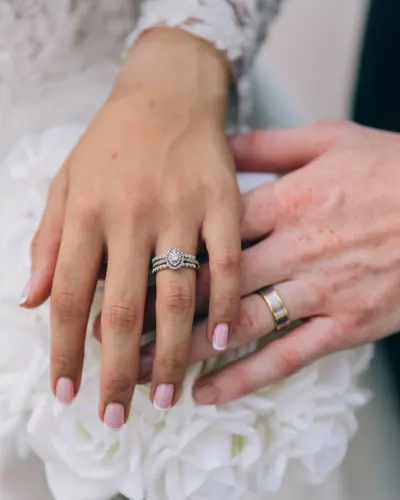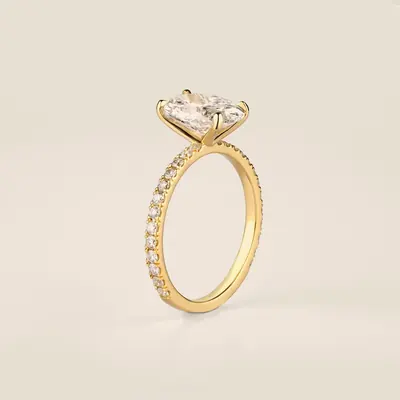
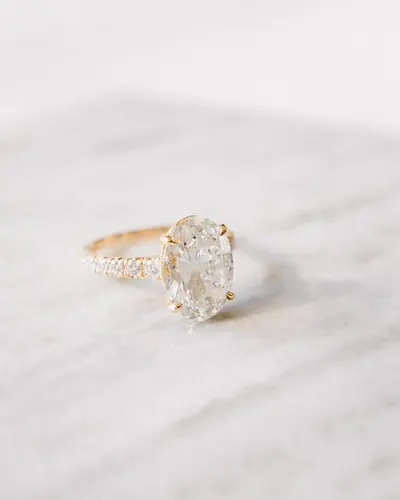
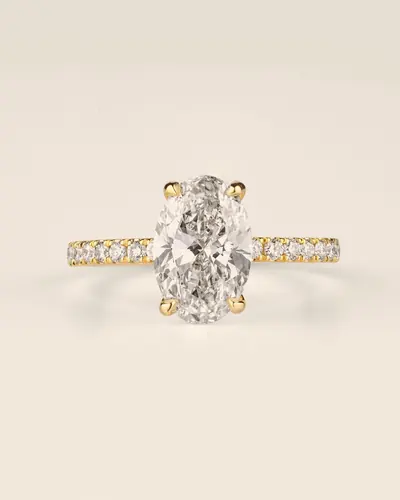
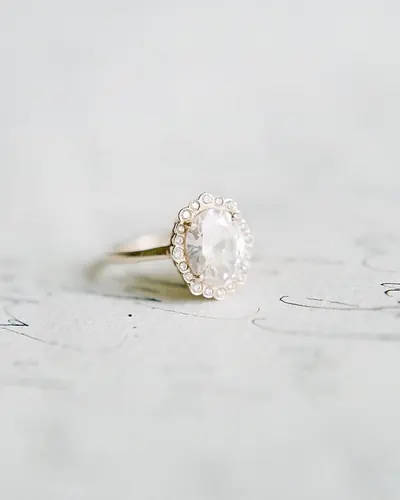
Oval lab grown diamonds look larger than rounds of the same weight and make the finger look longer. Browse oval rings in solitaire, halo and hidden halo settings, each with a starting price. Save the ones you like and we will have them, plus matching oval stones, on the tray when you visit.
No pieces match those filters. Clear one, or call (212) 642-4345 and we will tell you what is in the showroom.
Starting prices. Your final price depends on the diamond you choose.
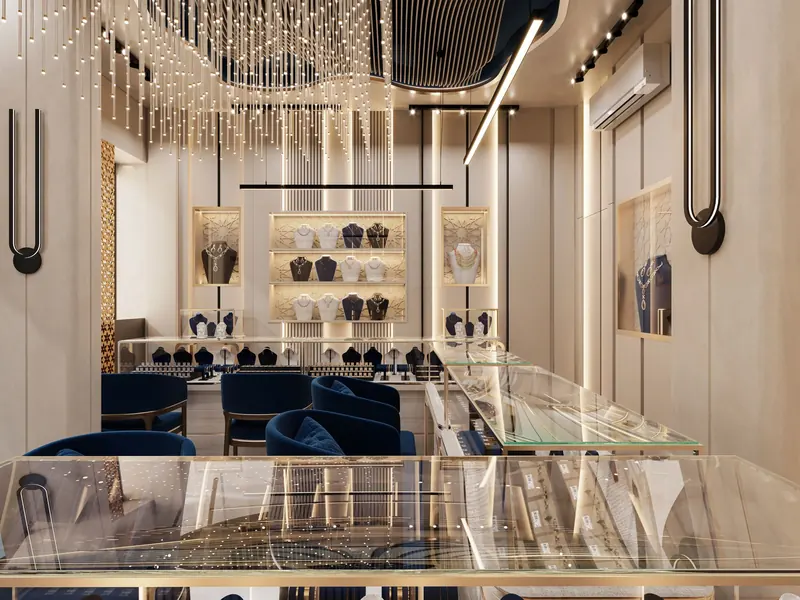
There is no cart here. Save what you like, book a time, and we lay it all out for you at 30 West 47th St, Suite 806, between 5th and 6th avenue.
Book a viewingAn oval engagement ring gives you the fire of a round lab diamond in a longer outline that flatters the hand. Oval rings are priced from $2,290 here, and every oval lab grown diamond we set comes with an IGI or GIA report you can read before you decide.
An oval is cut with the same kind of facets as a round brilliant, so it throws bright, lively light. Because it is stretched, it covers more of the finger than a round of the same weight. A 1.5 carat oval often looks closer to a 1.75 carat round when you look down at your hand.
Most ovals show a darker band across the middle, called a bow tie. Every oval has some. The question is how strong it is. In a photo it can look heavy or vanish completely, which is why we like you to see the stone itself. At the showroom we turn it under the loupe, then hold it by the window on 47th Street so you see it in daylight too.
The length to width ratio sets the look. As a rough guide:
Look at the shoulders too. Flat or bulging sides make an oval look lopsided. When you request stones for your visit, tell us the ratio you like and we pull three to five ovals near it so you can compare them side by side on the tray.
A four prong or six prong solitaire setting keeps the outline clean. Ovals have no sharp tips, so they are easy to protect. A hidden halo adds sparkle from the side without changing the face up look, and a full halo makes the stone read larger still. Ovals also pair well in a toi et moi ring next to a pear.
East west ovals, set sideways across the finger, are a quieter choice that sits low and catches less on sweaters. Try both directions on your hand; it takes a minute and settles the question fast.
Ovals hold color slightly more at the ends than rounds do, so many people choose G or better if the ring is white gold or platinum. In yellow gold you can often go a grade or two lower without seeing a difference. Clarity in the VS range looks clean to the eye in most ovals. Our guide to the 4Cs walks through the trade offs in plain words.
When you are ready, book a viewing and we will have your saved oval rings and matching stones out when you arrive.
There is no single best ratio. As a rough guide, about 1.30 to 1.40 looks classic and balanced, while 1.40 to 1.50 looks slimmer and longer. Tell us the look you like and we will pull ovals on both sides of it so you can compare.
Almost every oval shows some bow tie, a darker band across the middle. What matters is how strong it is. It is hard to judge in photos, so we compare several stones under the loupe and in daylight at the showroom.
Usually yes. An oval spreads its weight over a longer outline, so it covers more of the finger. Many people find a 1.5 carat oval looks close to a larger round when they look down at their hand.