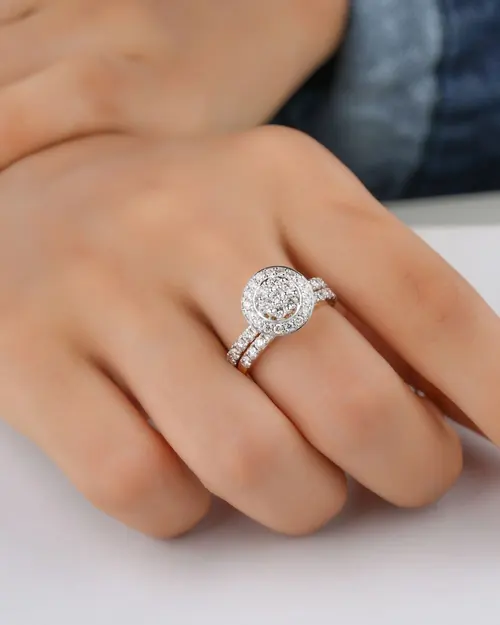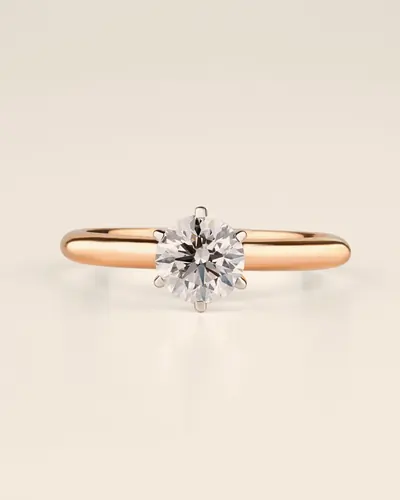
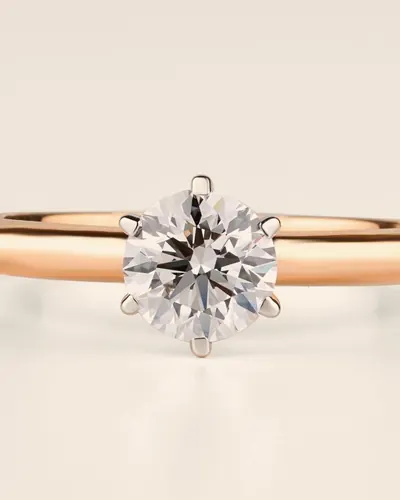
The round brilliant returns more light than any other shape, which is why it is the classic engagement ring diamond. Browse round lab diamond rings in solitaire, halo, hidden halo and three stone settings, each with a starting price, and save the ones you want to see on 47th Street.
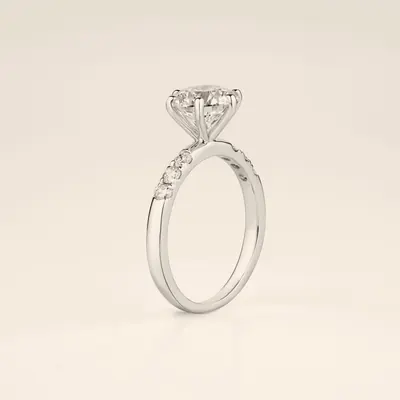
 New
No pieces match those filters. Clear one, or call (212) 642-4345 and we will tell you what is in the showroom.
Starting prices. Your final price depends on the diamond you choose.
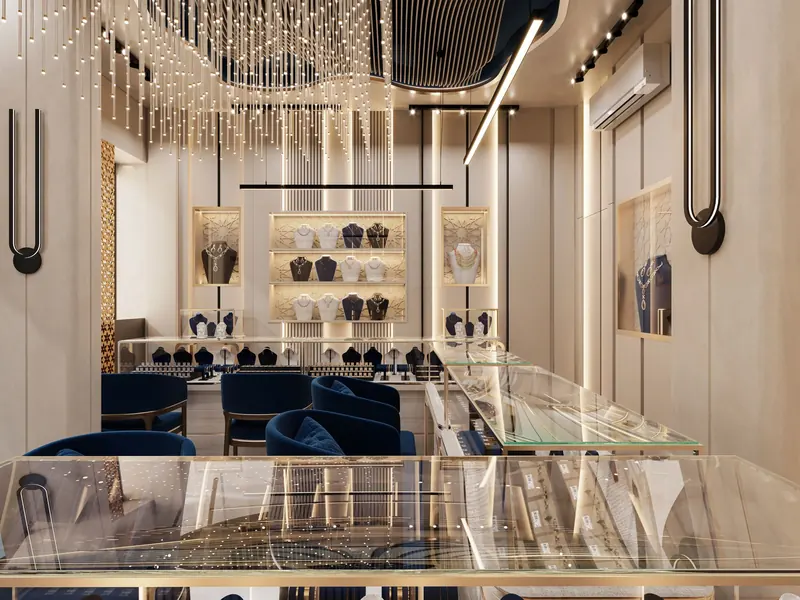
There is no cart here. Save what you like, book a time, and we lay it all out for you at 30 West 47th St, Suite 806, between 5th and 6th avenue.
Book a viewingA round engagement ring is the most familiar diamond in the world for a reason: the round brilliant returns more light than any other shape. Round lab diamond engagement rings are priced from $1,290, and each center stone comes with an IGI or GIA report.
The round brilliant has 57 or 58 facets laid out to send light back up through the top of the stone. When the cut is good, a round looks bright from every angle, even in dim light at dinner. It hides small inclusions well and shows very little color, so you can often choose a lower color or clarity grade than you would in a step cut.
That is the theory. In practice two rounds with the same grades can look different, because small changes in angles change the sparkle. That is why we put a few side by side on the tray and let you look through the loupe and then simply at your hand.
For a round, cut is the grade to protect. An Excellent or Ideal cut grade on the report is a good starting point. After that, look at the stone itself. A round that looks lively and even, without dark patches, is doing its job.
Rounds have no ratio to worry about, but they do have spread. A round cut too deep carries weight you cannot see from the top. Our 4Cs guide explains how depth and table affect the size you actually see.
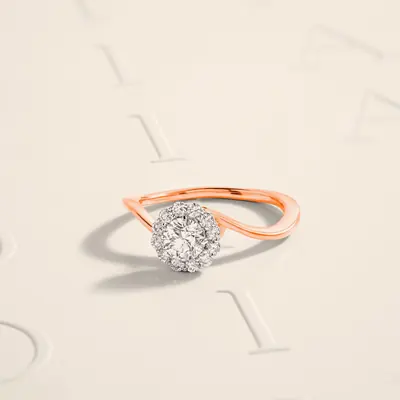
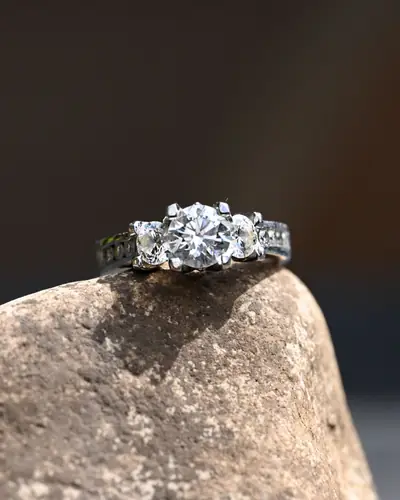
The round is easy to set and easy to wear. A classic four or six prong solitaire is the most popular look. A halo makes the center read noticeably larger, and a hidden halo adds a ring of sparkle seen only from the side. Rounds also make a balanced three stone ring.
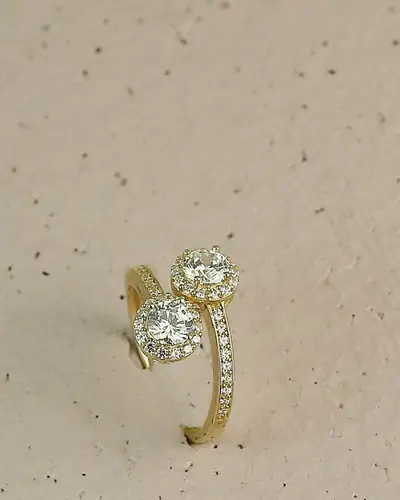
Metal changes the look more than people expect. A round in yellow gold feels warm and vintage. In platinum or white gold it looks crisp and bright. We have samples in each metal at the showroom so you can try them on before you choose.
Lab grown diamonds let many people step up in size. A 2 carat round, which would be a stretch in a mined stone, is a common choice here. Tell us the carat range, color, clarity and budget on the stone request page and we will have three to five rounds ready to compare. Then book a viewing at 30 West 47th Street.
Cut. A round with an Excellent or Ideal cut grade sparkles evenly and looks bright from every angle. After cut, rounds are forgiving on color and clarity, so you can often save there without seeing a difference.
Yes. A halo makes the center read larger, and a slim band helps too. Also check the millimeter size: a round cut too deep carries weight you cannot see from the top.
Any metal works. Yellow gold feels warm and vintage, platinum and white gold look crisp and bright. We keep samples in each metal so you can try them on at the showroom.