 New
Shop by shape
Emerald Cut Lab Diamond Engagement Rings
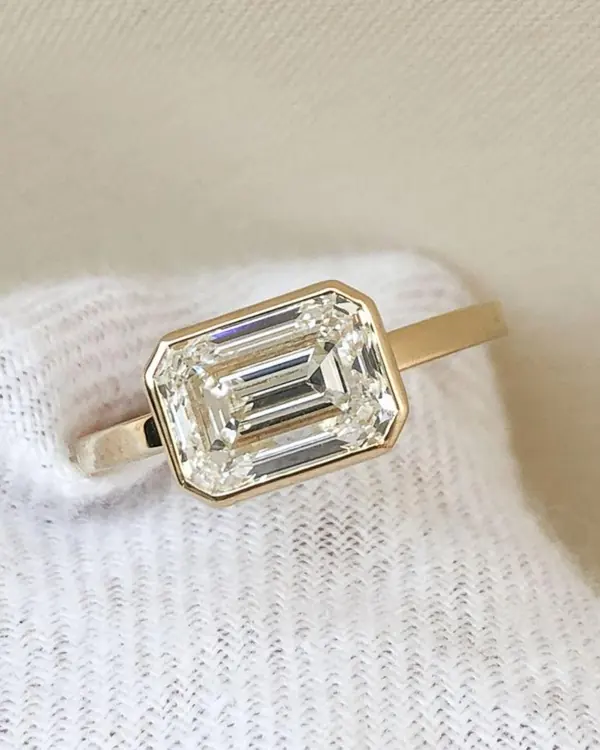
An emerald cut lab grown diamond has long step facets and an open, glassy table that flashes in wide bands of light. Browse emerald cut solitaires, east west bezels and three stone rings with starting prices, then book a viewing to see how each one looks on your hand.
New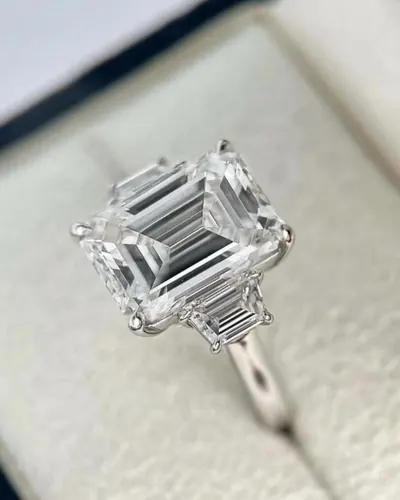
No pieces match those filters. Clear one, or call (212) 642-4345 and we will tell you what is in the showroom.
Starting prices. Your final price depends on the diamond you choose.
Save for my visit
See your saved pieces in person
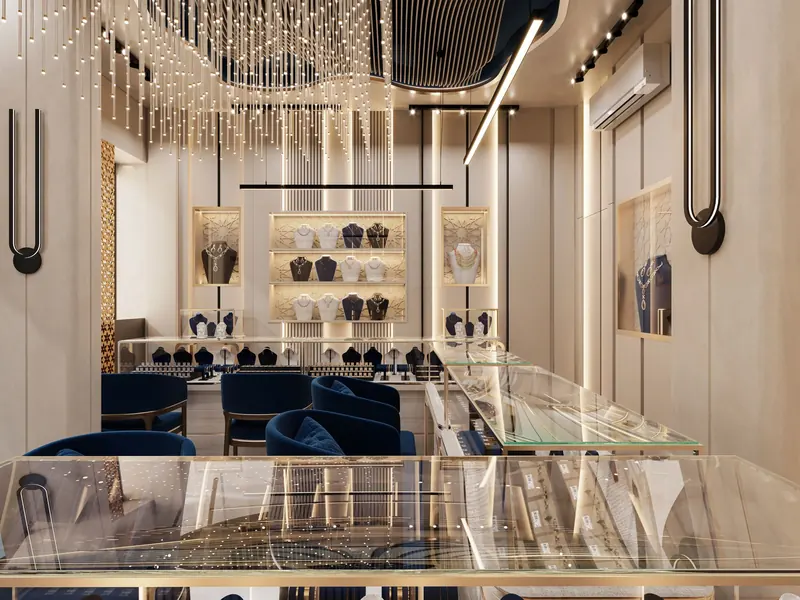
There is no cart here. Save what you like, book a time, and we lay it all out for you at 30 West 47th St, Suite 806, between 5th and 6th avenue.
Book a viewingAn emerald cut engagement ring is about clarity and calm. Long step facets run like steps down a staircase, and the light flashes in wide bands instead of tiny sparkles. Emerald cut rings are priced from $2,650, each center stone a lab grown diamond with its IGI or GIA report.
What makes an emerald cut different
Most shapes hide small flaws in their sparkle. An emerald cut does not. Its open table works like a window into the stone, so you can see straight into it. That is the beauty of the shape, and it is also why clarity matters more here than on a round or oval.
In person, a well cut emerald shows a clear hall of mirrors effect: rectangles inside rectangles that open and close as the hand moves. Photos flatten that. Seeing the stone under the loupe and then at arm’s length, by the window on 47th Street, tells you more in a minute than a page of specs.
Ratios, corners and clarity
As a rough guide, emerald cuts with a ratio of about 1.30 to 1.45 look classic. Around 1.50 and up they look long and slender, almost art deco. Under 1.30 they start to look square, close to an asscher.
The corners are cut off on purpose. Those small angled corners protect the stone, so the shape is easier to wear than a sharp cornered princess. Still, a setting with prongs or a bezel at each corner is a good idea.
For clarity, many people choose VS2 or better so the open table stays clean to the eye. Color shows a little more than in brilliant shapes, so G or H is a common floor in white metals. Our 4Cs guide explains why step cuts behave this way.
Settings and pairings
A simple four prong solitaire shows off the clean lines. An east west bezel, set sideways, feels modern and sits low. If you want more presence, an emerald with tapered baguettes or trapezoid side stones makes a striking three stone ring. Compare it with a radiant cut too: same outline, far more sparkle.
Emerald cuts look a little smaller face up than an oval of the same weight, because more of the weight sits in depth. If size on the hand matters most, ask us to show you a 2 carat emerald next to a 2 carat oval. The difference is easy to see side by side.
Tell us your ratio, color and clarity on the stone request page and we will pull three to five emerald cuts for your tray. Then book a viewing at the showroom and compare them in person.
Questions
Asked at the showroom
Does an emerald cut need higher clarity?
Often, yes. The open table shows the inside of the stone clearly, so many people choose VS2 or better. We check every emerald cut under the loupe with you before you decide, so you can see whether any inclusion is visible.
What ratio should I look for in an emerald cut?
As a rough guide, about 1.30 to 1.45 looks classic. Around 1.50 and higher looks long and slender. Under 1.30 starts to look square. We can put a few ratios side by side on the tray.
Is an emerald cut smaller than an oval of the same carat?
Face up it often looks a little smaller, because more of the weight sits in depth. Ask for the millimeter size, or compare the two shapes next to each other when you visit.
Before you visit